Sword Damascus steel has long been valued for its specific trends, strength, and sharpness. This ancient material, which originated in India and then became connected with the region of Damascus in Syria, has gained the ability of knife fans and collectors worldwide.
The History of Swords
The history begins in India, where Wootz steel was initially developed about 500 A.D. Later, this high-carbon steel was created by highly qualified artisans in Damascus, Syria, which evolved into a center for manufacturing swords. The swords were well-known during the Crusades because of their exceptional sharpness and longevity, allowing them to cut through lighter weaponry easily.
The Composition of Damascus Steel
Damascus swords are attractive due to their composition and beauty. The process of folding and forging layers of steel produces a unique shape that is aesthetically pleasing and useful in developing traditional Damascus steel. The strength and edge-holding capability of the sword are enhanced by incorporating trace elements like vanadium into the high-carbon steel.
The Lost Art and Modern Revival
Since the traditional methods of making Damascus steel swords were forgotten, the number of genuine swords produced in the 19th century decreased. Production is back due to efforts made by trendy metallurgists and blacksmiths to identify ancient techniques. Modern artists use advanced techniques to preserve the talent that distinguishes these blades while accurately portraying their historical attributes.
The Damascus Swords at Pioneer Edge
Pioneer Edge offers a rich history of swords, with an extensive variety of expertly made swords designed by qualified artists. Every blade showcases the ancient heritage of Damascus steel by fusing traditional methods with today’s design.
Our swords will likely excite both sword collectors and martial artists with their stunning appearance and powerful blades. See for yourself the magic of these fabled blades by exploring our collection.
Damascus Sword
Showing all 12 results
-
Damascus Sword, Fantacy Damascus Knife
PEK-FK-001
Product Details :
Brand Name : Pioneer Edge
Model Number : PEK-FK-001
Overall Length : 28 inch, 71 cm approx.
Handle Length : 11 inch, 28 cm approx.
Blade Length : 17 inch, 43 cm approx.
Type Of Product : Fantacy , Damascus ,
Blade Material : Damascus Steel
Handle Material: Micarta , Fine Mosaic Pins ,
SKU: PEK-FK-001 -
Damascus Sword, Fantacy Damascus Knife, Swords & Axes
PEK-FK-002
Product Details :
Brand Name : Pioneer Edge
Model Number : PEK-FK-002
Overall Length : 21 inch, 53 cm approx.
Handle Length : 8 inch, 20 cm approx.
Blade Length : 13 inch, 33 cm approx.
Type Of Product : Fantacy , Damascus , SWORD
Blade Material : Damascus Steel
Handle Material: Micarta , Fine Mosaic Pins ,
SKU: PEK-FK-002 -
Fantacy Damascus Knife, Damascus Sword, Swords & Axes
PEK-FK-003
Product Details :
Brand Name : Pioneer Edge
Model Number : PEK-FK-003
Overall Length : 21 inch, 53 cm approx.
Handle Length : 8 inch, 20 cm approx.
Blade Length : 13 inch, 33 cm approx.
Type Of Product : Fantacy , Damascus , SWORD
Blade Material : Damascus Steel
SKU: PEK-FK-003 -
Damascus Sword, Fantacy Damascus Knife, Swords & Axes
PEK-FK-004
Product Details :
Brand Name : Pioneer Edge
Model Number : PEK-FK-004
Overall Length : 28 inch, 71 cm approx.
Handle Length : 11 inch, 28 cm approx.
Blade Length : 17 inch, 43 cm approx.
Type Of Product : Fantacy , Damascus ,
Blade Material : Damascus Steel
Handle Material: Micarta , Fine Mosaic Pins ,
SKU: PEK-FK-004 -
Damascus Sword, Swords & Axes
PEK-SW-001-SOUTH-ASIAN-KRIS-SWORD
A striking **Hand-Forged Damascus Steel Kris Sword**, a piece that combines the fluid, traditional geometry of Southeast Asian weaponry with the rugged durability of modern custom bladesmithing.
### **Blade Profile & Material**
* **Wavy “Luk” Blade:** The sword features the iconic undulating “wavy” shape characteristic of a Kris. This design isn’t just for show; it traditionally symbolizes the “naga” (serpent) and provides a unique cutting dynamic.
* **Damascus Steel Construction:** The blade is forged from layered steel, visible through the intricate **twist pattern**. The high-contrast etching reveals the rippling layers, which run the full length of the blade to the needle-point tip.
* **Detailed Ricasso:** The base of the blade (near the hilt) features aggressive, ornamental file work and a wide, flared guard area that adds a sense of power and tactical weight to the silhouette.### **Hilt & Craftsmanship**
* **Ergonomic Hardwood Handle:** The handle is carved from a premium dark wood, featuring a traditional “pistol-grip” curve that allows for a natural, secure hold.
* **Intricate Pinwork:** The hilt is decorated with a series of **inlaid silver or brass pins** in a mosaic style, adding a refined, artisan touch to the dark wood.
* **Polished Bolster:** A clean, metallic collar connects the blade and handle, providing a solid transition and ensuring the piece is well-balanced for its length.### **Utility & Appeal**
This sword is a high-end collector’s item that bridges the gap between historical replica and functional art. Its dramatic 13-wave (approximate) pattern and the distinctive grain of the Damascus steel make it a premier display piece for enthusiasts of exotic and hand-forged weaponry.SKU: PEK-SW-001-KRIS -
Damascus Sword, Swords & Axes
PEK-SW-002
Product Details :Brand Name : Pioneer Edge
Model Number : PEK-SW-002
Overall Length : 32 inch, 81 cm approx.
Handle Length : 8 inch, 20 cm approx.
Blade Length : 24 inch, 61 cm approx.
Type Of Product : Sword , Damascus
Blade Material : Damascus Steel
Handle Material: Camel Bone , Damascus Guards
SKU: PEK-SW-002 -
Damascus Sword, Swords & Axes
PEK-SW-003
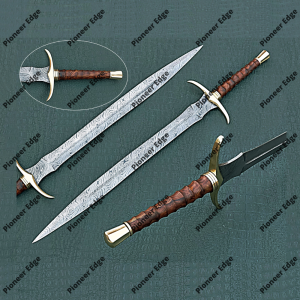
Sophisticated **Custom Hand-Forged Damascus Steel Short Sword**, designed with a clean, classic silhouette that emphasizes the high-end materials used in its construction.
### **Blade Artistry**
* **Damascus Steel Pattern:** The blade features a stunning **Raindrop or Fireball Damascus pattern**. The tightly swirled ripples are highly consistent throughout the length of the blade, showcasing expert control during the forge-welding process.
* **Geometry:** It is a double-edged blade with a prominent **central fuller (blood groove)** that runs nearly the entire length. This feature reduces the weight of the sword without compromising its strength, while also adding a professional, balanced look.
* **Finish:** The high-contrast acid etch creates a deep “topographical” texture that makes the steel pattern pop against the dark green backdrop.### **Hilt & Hardware**
* **Crossguard:** The sword features a **polished brass or gold-toned guard** with elegantly curved quillons that point toward the blade. This “down-turned” style is both a functional hand guard and a classic aesthetic choice.
* **Handle (Grip):** The handle is crafted from **stabilized Burl wood**, known for its complex, swirling grain and deep reddish-brown tones. The handle is contoured with subtle ridges to provide a secure and comfortable ergonomic grip.
* **Pommel:** A matching polished metal pommel caps the handle, acting as a counterweight to ensure the sword is well-balanced for handling.### **Technical Summary**
This piece is an excellent example of functional art. While the blade geometry suggests a nimble, versatile short sword, the level of detail in the Damascus pattern and the use of premium burl wood make it a high-tier collector’s item. It strikes a perfect balance between a rugged survival tool and a gallery-quality display piece.SKU: PEK-SW-003 -
Damascus Sword, Swords & Axes
PEK-SW-004
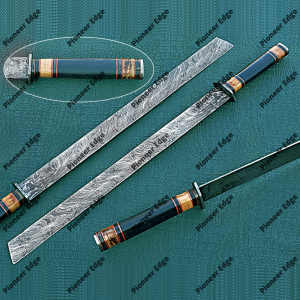
Rugged and formidable **Hand-Forged Damascus Steel Cleaver Sword**, inspired by the profile of a modern tactical machete or a traditional Japanese *Chokutō*. It combines a heavy-duty blade geometry with a refined, multi-material hilt.
### **Blade Profile & Construction**
* **Straight-Edge Geometry:** The blade features a long, straight cutting edge ending in a **clipped or “tanto-style” tip**. This shape is designed for maximum chopping power and structural durability, making it an excellent crossover between a survival tool and a combat blade.
* **Intricate Damascus Pattern:** The steel showcases a vibrant **Flowing Twist Damascus pattern**. The high-contrast etching reveals tight, swirling layers that move organically along the flat of the blade, emphasizing its handmade origin.
* **Full-Width Grind:** The blade maintains a consistent width from the guard to the tip, providing a significant “sweet spot” for heavy-duty use.### **Hilt & Handle Artistry**
* **Composite Grip:** The handle is a beautiful example of mixed-media craftsmanship. It features a central section of **polished black ebony or synthetic resin**, flanked by spacers of **stabilized burl wood**.
* **Accent Rings:** Fine metallic and colored spacers (likely brass and colored fiber) separate the wood and black sections, adding a high-end, custom-look detail.
* **Guard and Pommel:**
* **Minimalist Guard:** A low-profile steel crossguard provides hand protection without adding unnecessary bulk, maintaining the sword’s sleek, linear aesthetic.
* **Finished Pommel:** The handle is capped with a matching wood and metal pommel, ensuring the blade is well-balanced for a one-handed or hand-and-a-half grip.### **Summary of Aesthetic**
This cleaver sword is a “workhorse” piece that doesn’t sacrifice beauty for utility. Its clean, straight lines and heavy blade make it feel powerful and intentional, while the complex Damascus steel and detailed handle work ensure it stands out as a premium collector’s item. It is ideal for those who appreciate the intersection of tactical design and traditional forging.SKU: PEK-SW-004 -
Damascus Sword, Historical / Movie / Medieval Sword, Swords & Axes
PEK-SW-005
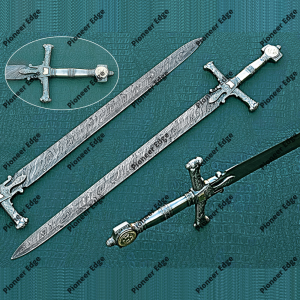
Exquisite **Hand-Forged Damascus Steel Medieval Arming Sword**, featuring a level of ornate detail that places it in the category of a “Masterpiece” or “King’s Sword” ceremonial piece.
### **Blade Craftsmanship**
* **Damascus Pattern:** The blade showcases a breathtaking **Twist Damascus pattern**. The rippling, wood-grain-like layers are exceptionally tight and consistent, flowing seamlessly from the hilt to the spear-point tip.
* **Profile:** It is a classic straight, double-edged blade. The high-contrast acid etching emphasizes the various layers of steel, giving the surface a shimmering, topographical appearance.
* **Reinforced Ricasso:** The base of the blade is integrated with an ornamental steel langet that extends from the guard, providing extra structural reinforcement and a seamless visual transition.### **Hilt & Fitting Details**
* **Ornate Crossguard:** The guard is a work of art in itself, featuring **deep-relief engravings** of scrolls and floral motifs. The quillons (arms of the guard) flare out with traditional medieval styling, ending in detailed decorative terminals.
* **Intricate Grip:** Unlike standard wood grips, this handle is made from **polished steel or silver-toned metal**, featuring textured bands and engraved filigree. This ensures the sword feels substantial and provides a very high-end, regal aesthetic.
* **Custom Pommel:** The sword is finished with a large, **medallion-style pommel**. It features a central circular inset—ideal for a family crest or custom logo—surrounded by matching engraved patterns that act as a perfect counterweight to the long blade.### **Summary of Aesthetic**
This sword is a premier collector’s item that exudes authority and heritage. The combination of the complex Damascus steel with the fully engraved metallic hilt makes it look like a historical artifact from a royal armory. It is a perfect flagship piece for a collection, designed for those who appreciate the highest level of craftsmanship in traditional weaponry.SKU: PEK-SW-005 -
Damascus Sword, Historical / Movie / Medieval Sword, Swords & Axes
PEK-SW-006-GOLDEN
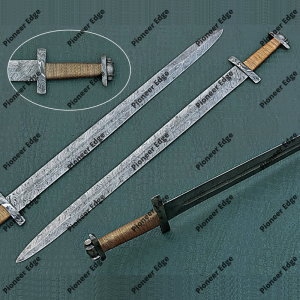
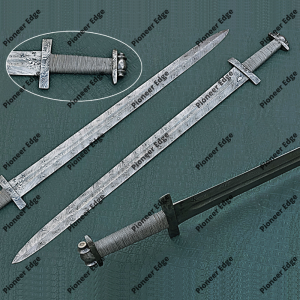
Stunning Hand-Forged Damascus Steel Viking Ulfberht-Style Sword, a premier example of Norse craftsmanship characterized by its legendary profile and intricate pattern-welding.
Blade Artistry & Construction
Twist Damascus Pattern: The blade features a high-density Twist Damascus pattern. The etching is expertly executed, revealing complex, flowing ripples that run the entire length of the blade, from the wide base to the reinforced tip.Authentic Profile: This sword maintains the traditional broad, double-edged geometry of the Viking Age. It features a wide central fuller (blood groove), which significantly reduces the overall weight while providing the flexibility and strength necessary for a functional combat blade.
Forged Guard: The short, stout crossguard is also crafted from matching Damascus steel, creating a visually unified transition from the hilt to the blade.
Hilt & Handle Details
Copper Wire-Wrapped Grip: The handle is meticulously wrapped in braided copper wire. This not only provides a striking color contrast against the dark steel but also offers a superior, high-friction grip for handling.Traditional Lobed Pommel: The sword is capped with a five-lobed pommel, a classic indicator of high-status Viking weaponry. The pommel is forged from Damascus steel and securely peened, acting as a perfect counterweight to ensure the sword is agile and well-balanced.
Material Contrast: The combination of the shimmering silver/black steel with the warm, metallic glow of the copper wrap gives the piece a regal, “warrior-king” aesthetic.
Technical Summary
This Viking sword is a high-tier collector’s item that honors the heritage of the Northmen. The use of premium materials—from the layered Damascus steel to the intricate wire wrapping—makes it a standout display piece. It balances historical authenticity with the refined finish of modern custom bladesmithing, making it an ideal flagship for any specialized collection.SKU: PEK-SW-006-GOLDEN -
Damascus Sword, Historical / Movie / Medieval Sword, Swords & Axes
PEK-SW-006-SILVER
Powerful **Hand-Forged Damascus Steel Viking Sword**, a masterpiece of Norse-inspired weaponry that emphasizes the raw beauty of pattern-welded steel and historical silhouette.
### **Blade Artistry & Construction**
* **Vibrant Damascus Pattern:** The blade features a high-contrast **Twist and Star Damascus pattern**. The etching is exceptionally deep, making the shimmering, rippling layers stand out vividly across the wide surface of the blade.
* **Classic Viking Geometry:** It is a broad, double-edged blade with a tapered profile leading to a spear-point tip. A long, shallow **fuller (blood groove)** runs down the center, a traditional feature designed to lighten the sword while maintaining its structural rigidity and flexibility.
* **Forged Fittings:** Uniquely, the **crossguard and pommel** are also forged from matching Damascus steel, creating a seamless, unified aesthetic from the tip of the blade to the end of the hilt.### **Hilt & Handle Details**
* **Textured Wire-Wrapped Grip:** The handle is tightly wrapped in **steel or silver wire**, providing an authentic period-correct look. This wrap offers a superior non-slip grip and a rugged, metallic texture that complements the overall “warrior” aesthetic.
* **Traditional Pommel:** The sword features a **multi-lobed “cocked hat” pommel**, a hallmark of 9th and 10th-century Viking design. The pommel is securely peened, ensuring the sword is perfectly counterbalanced for one-handed use.
* **Minimalist Guard:** The short, straight crossguard is typical of the Carolingian style, designed to protect the hand without obstructing the swift, chopping motions favored in Norse combat.### **Technical Summary**
This Viking sword is a premier example of historical craftsmanship met with modern forging excellence. The use of Damascus steel for the fittings—not just the blade—sets this piece apart as a high-tier collector’s item. It exudes a sense of ancient strength and artistry, making it an ideal centerpiece for any collection focused on legendary European weaponry.SKU: PEK-SW-006-SILVER -
Damascus Sword, Historical / Movie / Medieval Sword, Swords & Axes
PEK-SW-007
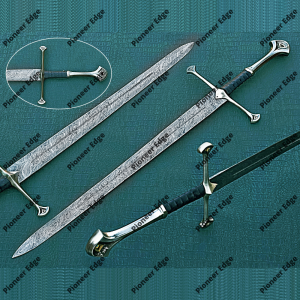
Majestic **Hand-Forged Damascus Steel Scottish Claymore-Style Sword**, a piece that captures the spirit of Highland warrior heritage with a refined, high-contrast finish.
### **Blade Craftsmanship**
* **Intricate Damascus Pattern:** The blade features a dense and vibrant **Twist Damascus pattern**. The deep acid etching brings out shimmering, wood-grain ripples that flow consistently from the broad base down to the sharp spear-point tip.
* **Broad Double-Edge Profile:** It maintains a wide, powerful silhouette typical of a great sword. The central ridge provides excellent structural integrity, ensuring the blade is both stiff and durable for its length.
* **High-Contrast Finish:** The play between the dark and light layers of steel creates a topographical texture that highlights the complex forge-welding process used to create the piece.### **Hilt & Fitting Artistry**
* **Iconic Claymore Guard:** The sword features the classic **down-sloping crossguard** synonymous with Scottish claymores. Each quillon ends in a decorative “four-leaf clover” or quatrefoil terminal, which is a traditional hallmark of this style.
* **Contoured Leather Grip:** The handle is wrapped in **premium black leather**, featuring deep ribbing for a secure, ergonomic grip. This ensures maximum control for one-handed or hand-and-a-half use.
* **Scent-Stopper Pommel:** A polished steel pommel in the “scent-stopper” shape caps the hilt. This design acts as a vital counterweight, bringing the balance point closer to the guard for better agility and handling.### **Technical Summary**
This sword is a premier fusion of historical Scottish design and elite custom bladesmithing. The combination of the iconic quatrefoil guard and the shimmering Damascus steel makes it a centerpiece for any high-end collection. It is a bold, “hero” piece that balances the rugged nature of a battlefield weapon with the elegance of functional art.SKU: PEK-SW-007